Summer School

Modern ML
in Chemistry

From (foundational) interatomic potentials to generative AI

Funded by COST Action DAEMON
Dates
3–5 August 2026
Venue
Faculty of Chemistry, Leipzig University
Format
4 sessions with lectures & hands-on tutorials
Registration
Closed
01

About the School

ML4Chem is a three-day school on machine learning methods for chemistry and materials science, held 3–5 August 2026 at Leipzig University. It is aimed at PhD students, postdocs, and early-career researchers in computational chemistry, materials science, and related fields.

The scientific core is four sessions, one per half-day. Each session opens with a 15-minute contributed talk from a participant, continues with a lecture by the invited speaker, and closes with a two-hour tutorial run by the same speaker.

  1. (Foundational) Interatomic Machine Learning Potentials: MACE and Beyond

    Equivariant architectures, foundational models, and fine-tuning strategies for accurate and scalable molecular simulations.

  2. Beyond the Ground State: Machine Learning for Photochemistry

    Machine learning approaches for excited states, photodynamics, and nonadiabatic processes.

  3. Machine Learning for Extended Systems: QM(ML)/MM

    Hybrid quantum mechanics/molecular mechanics methods enhanced by machine learning for large-scale, condensed-phase, and biological systems.

  4. Machine Learning for Molecular Material Design: Generative Modeling

    Generative AI for the inverse design of molecules and materials with targeted properties.

The school closes on Wednesday morning with a career round table: Prof. Dr. Leticia González (University of Vienna), Prof. Dr. Reinhard J. Maurer (University of Vienna), Jun.-Prof. Dr. Leonie Weissweiler (Leipzig University / ScaDS.AI), and Daniel Zügner (Microsoft Research) take questions on research careers inside and outside academia, followed by closing remarks.

02

Speakers

Each session is taught by the people who lead it: the invited speaker gives the lecture, and the speaker or a member of their group runs the hands-on tutorial. Wednesday’s round-table guests come from two different directions: three hold professorships, one does research in industry.

Lectures & Tutorials

Session 1: Interatomic ML Potentials

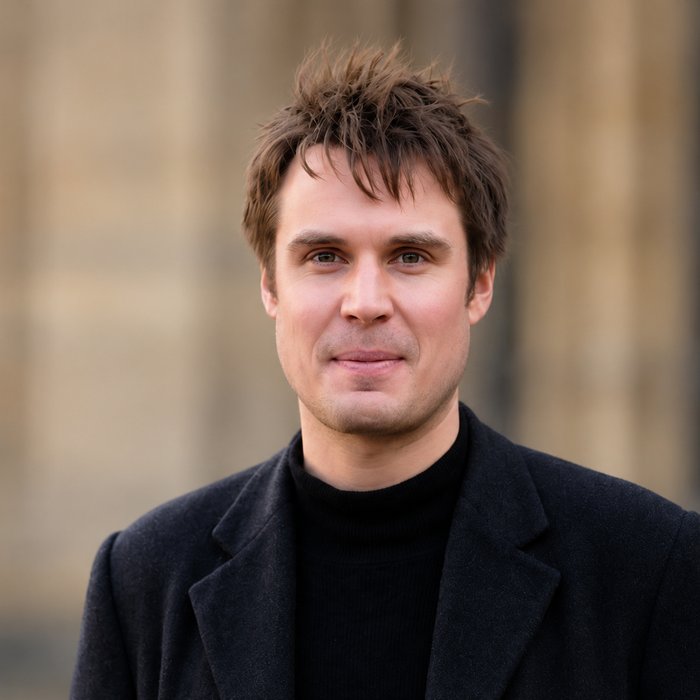
Ilyes Batatia

Csányi Group, Department of Engineering, University of Cambridge

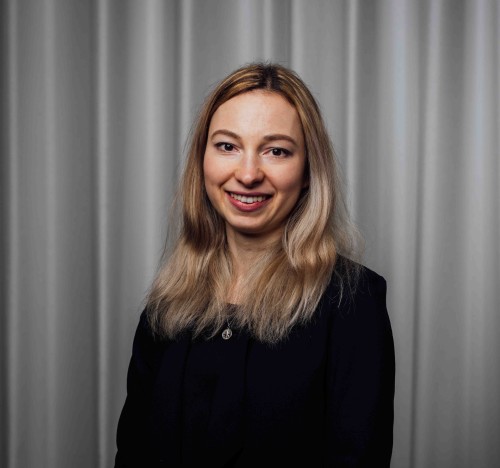
Prof. Dr. Julia Westermayr
Session 2: Photochemistry

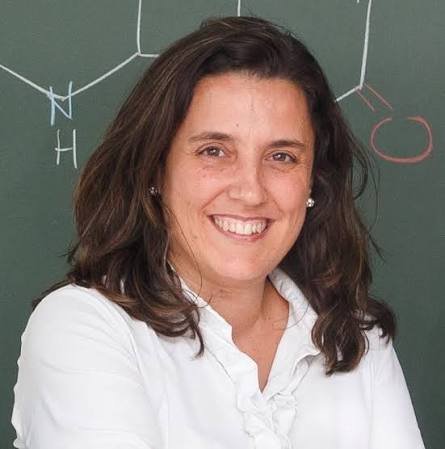
Prof. Dr. Julia Westermayr

Professor of AI in Theoretical Chemistry, Leipzig University

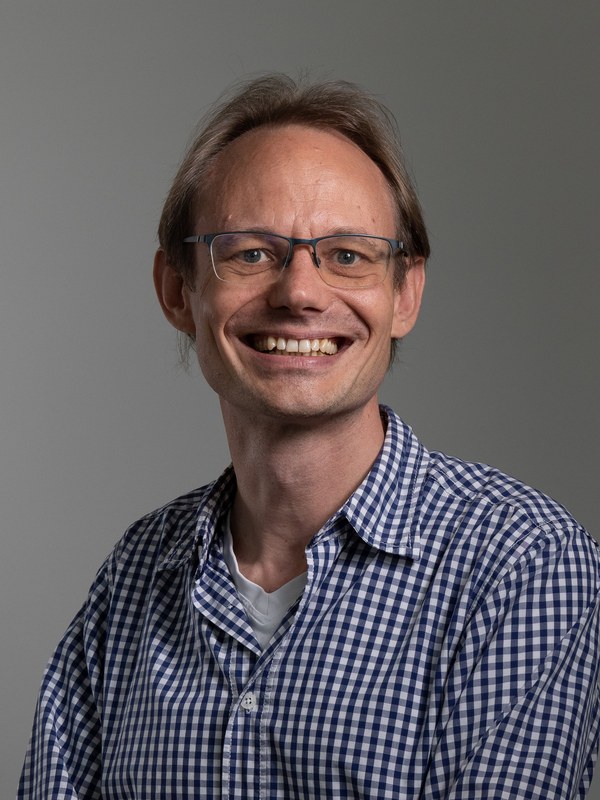
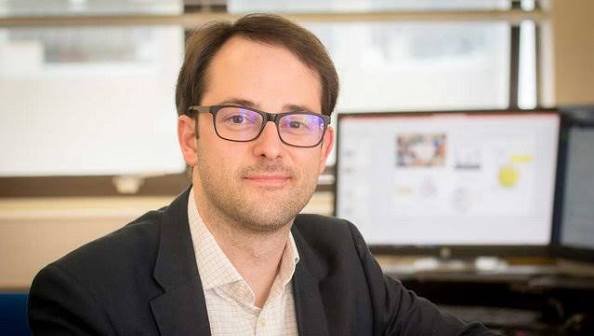
Prof. Dr. Chris Oostenbrink
Session 3: QM(ML)/MM

Prof. Dr. Chris Oostenbrink

Professor of Molecular Modeling and Simulation, BOKU University, Vienna

Dr. Peter Poliak
Session 3: QM(ML)/MM

Dr. Peter Poliak

Institute of Molecular Modeling and Simulation, BOKU University, Vienna

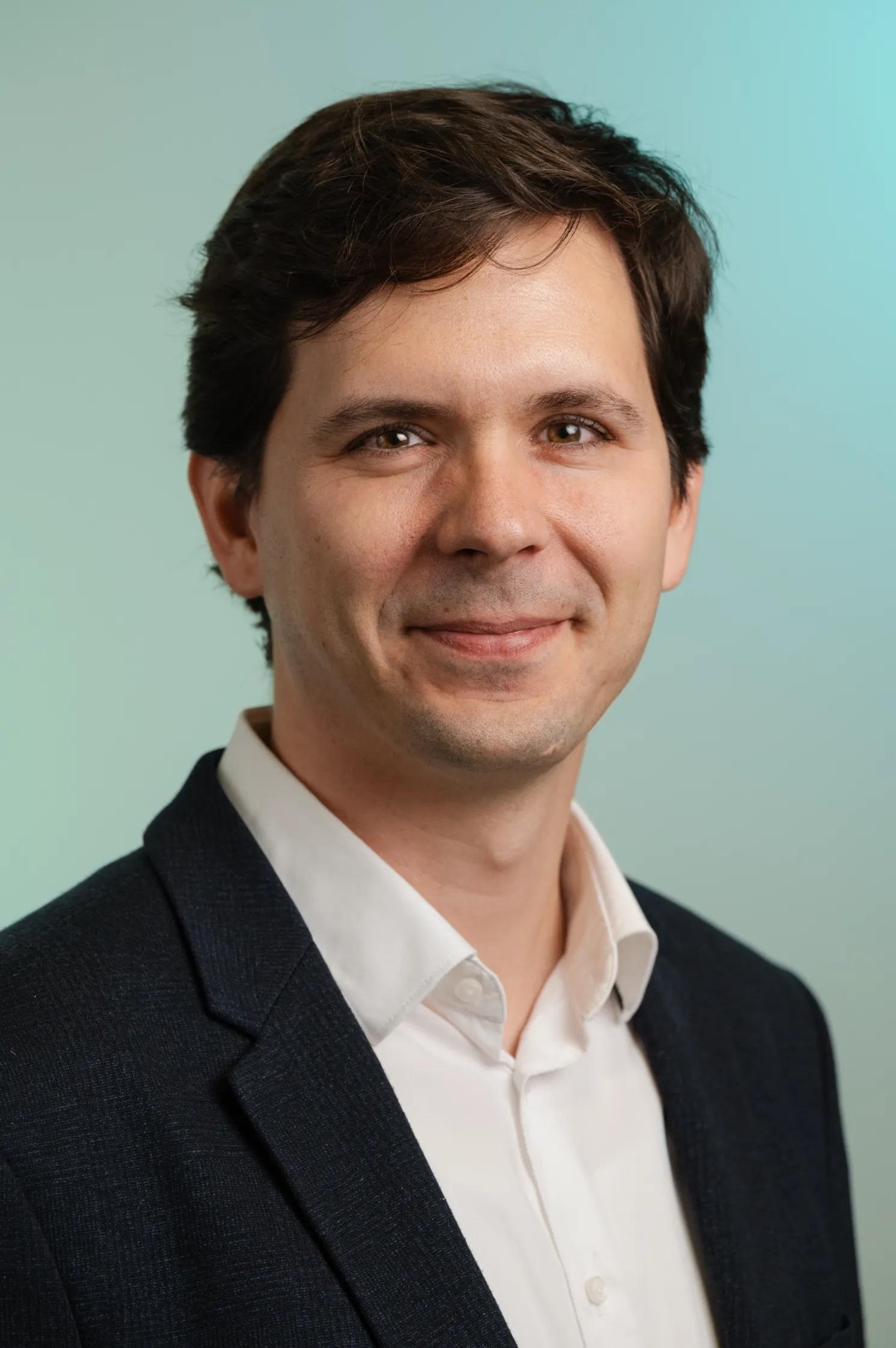
Dr. Niklas Gebauer
Session 4: Generative Modeling

Dr. Niklas Gebauer

Machine Learning Group, TU Berlin and BIFOLD

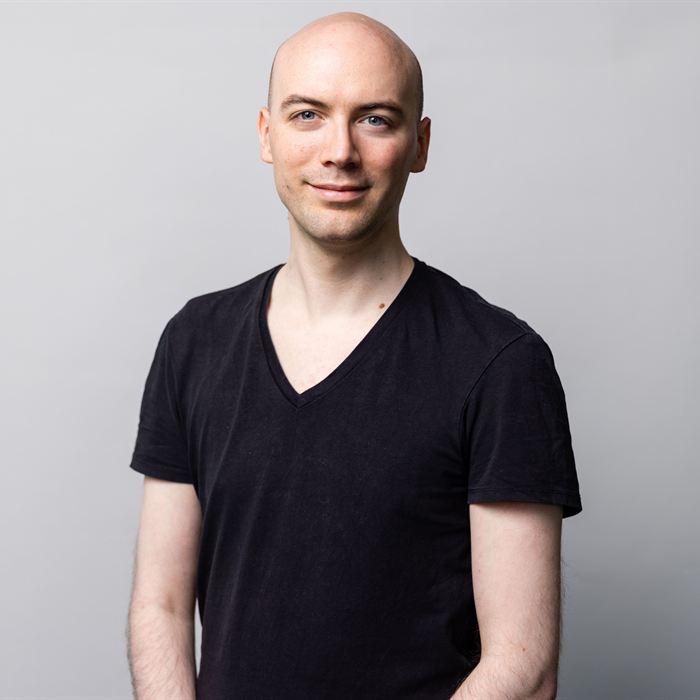
Stefaan Hessmann
Session 4: Generative Modeling

Stefaan Hessmann

Machine Learning Group, TU Berlin and BIFOLD

Career Round Table

Prof. Dr. Leticia González

Prof. Dr. Leticia González

Professor of Theoretical Chemistry, University of Vienna

Prof. Dr. Reinhard J. Maurer

Prof. Dr. Reinhard J. Maurer

Professor of Computational Materials Discovery, University of Vienna

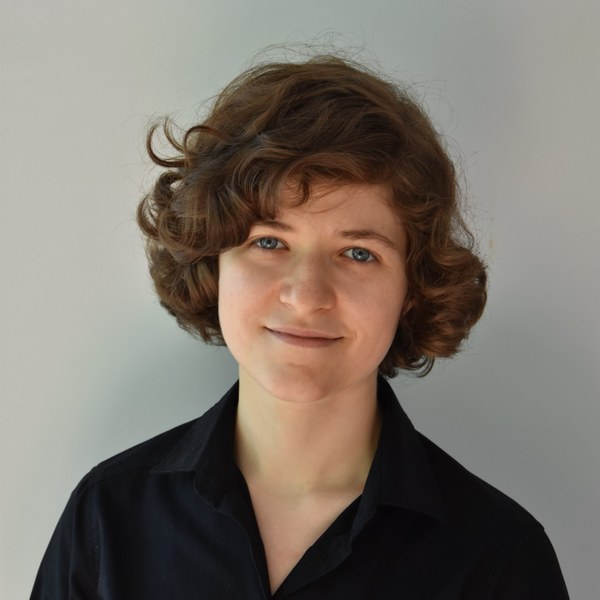
Jun.-Prof. Dr. Leonie Weissweiler

Jun.-Prof. Dr. Leonie Weissweiler

Junior Professor of Natural Language Processing, Leipzig University / ScaDS.AI

Daniel Zügner

Daniel Zügner

Senior Researcher, Microsoft Research, Berlin

03

Program

On Monday and Tuesday the program repeats one rhythm twice a day: contributed talk, lecture, coffee, tutorial. Wednesday belongs to the career round table. All lectures and tutorials take place in the Experimental Lecture Hall (Experimentalhörsaal) of the Faculty of Chemistry; the poster session is held in the Freiarbeitsbereich.

Day 1

Monday August 3

08:30Registration
08:50–09:00Welcome
Session 1: Interatomic ML Potentials
09:00–09:15Contributed talkHendrik Bergner-Weiske
09:15–10:30LectureIlyes Batatia
10:30–11:00Coffee break
11:00–13:00Hands-on tutorialIlyes Batatia
13:00–14:00Lunch
Session 2: ML for Photochemistry
14:00–14:15Contributed talkDilara Farkhutdinova
14:15–15:30LectureProf. Dr. Julia Westermayr
15:30–16:00Coffee break
16:00–18:00Hands-on tutorialProf. Dr. Julia Westermayr
18:30–20:00Poster sessionFreiarbeitsbereich, with snacks and beverages
Day 2

Tuesday August 4

Session 3: QM(ML)/MM
09:00–09:15Contributed talkRhyan Barrett
09:15–10:30LectureProf. Dr. Chris Oostenbrink & Dr. Peter Poliak
10:30–11:00Coffee break
11:00–13:00Hands-on tutorialProf. Dr. Chris Oostenbrink & Dr. Peter Poliak
13:00–14:00Lunch
Session 4: Generative Modeling
14:00–14:15Contributed talkPatrícia Ramos
14:15–15:30LectureDr. Niklas Gebauer
15:30–16:00Coffee break
16:00–18:00Hands-on tutorialStefaan Hessmann
18:00Conference BBQDestille
Day 3

Wednesday August 5

10:00–11:00Career round tableProf. Dr. Leticia González, Prof. Dr. Reinhard J. Maurer, Jun.-Prof. Dr. Leonie Weissweiler, Daniel Zügner
11:00–11:30Coffee break
11:30–13:00Career round tablecontinued
Closing remarks

Contributed Talks

  1. Session 1, Mon 09:00

    ML-accelerated adsorption dynamics on semiconductor surfaces

    Hendrik Bergner-Weiske, Leipzig University

  2. Session 2, Mon 14:00

    Vibrational Fingerprints of Ultrafast Spin Crossover in an Fe(III) Complex

    Dilara Farkhutdinova, University of Vienna

  3. Session 3, Tue 09:00

    Incorporating long-range interactions via the multipole expansion into ground and excited-state molecular simulations

    Rhyan Barrett, Leipzig University

  4. Session 4, Tue 14:00

    Generative Inverse Design of Tetrathiafulvalene-Based Molecular Materials for Organic Electronics

    Patrícia Ramos, Technical University of Porto

Posters

  1. 01

    Nonadiabatic Excited-State Pathways from SOCT-ISC to Hydration-Driven Proton Transfer: A Trajectory-Based Perspective

    Moumita Banerjee, Linköping University

  2. 02

    ML vs. expert intuition for AD-HoC Nickel Cross-Coupling: Genetic algorithms coupled with regression algorithms to learn from heterogeneous experimental data

    Daniel Bitterlich, Leipzig University

  3. 03

    Gas-Phase Vibrational Spectroscopy of PF6(H2O)0–18: From Isolated Clusters to the Condensed Phase

    Hannah Buttkus, Leipzig University

  4. 04

    Toward Closed-Loop Design of Enantioselective N-Heterocyclic Carbene Catalysts for the Benzoin Reaction

    Shuai Chen, University of Groningen

  5. 05

    A High-Throughput Generative Workflow for Data-Driven Reaction Environment Optimization

    Robin Curth, Leipzig University

  6. 06

    Combining genetic algorithms with omits in kinematical refinements of cRED data: pathways towards higher accuracy

    Alexander Feige, Leipzig University

  7. 07

    Machine learning for smell: ordinal odor strength prediction of molecular perfumery components

    Peter Fichtelmann, Leipzig University

  8. 08

    First principles construction of Newns-Anderson Hamiltonians for hydrogen chemistry at surfaces

    Nils Hertl, University of Warwick

  9. 09

    The Solvation Line: Mapping Close-Range Interactions in Reaction Mechanisms

    Federica Lauria, University of Turin

  10. 10

    Dataset Design for Buffer Region Neural Networks: from Sampling to Simulation

    Bettina Lier, BOKU University, Vienna

  11. 11

    Mixed Metal Oxides in the Gas Phase: The Study of the FeAlO3+ and Al2O3+ Clusters

    Lucas W. de Lima, Humboldt-Universität zu Berlin

  12. 12

    E(3)-VERDE: A 3D-Equivariant Neural Network for the Complete Ground- and Excited-State Redox Landscape of Organic Photocatalysts

    Andres Lopez, Northeastern University

  13. 13

    High-Precision Modeling of Nuclear Quantum Effects at Low Temperatures in CO/NaCl(100) Adsorption Using MACE Potentials and Path-Integral Methods

    Mateo Pescador Arboleda, University of Potsdam

  14. 14

    Quantum nuclear and band-dispersion effects recover near-UV absorption in short-hydrogen-bonded organic crystals

    Muhammad Nawaz Qaisrani, Technische Universität Ilmenau

  15. 15

    Basin-Hopping Monte Carlo with Transferable Neural Network Potentials: Mapping Germanium and Aluminium Distributions in Zeolites

    Indranil Saha, RWTH Aachen University

  16. 16

    Investigating ZnPd nanoparticles supported on ZnO using atomistic simulations with machine learning potentials

    Roy Schumacher, Forschungszentrum Jülich

  17. 17

    Restricted or unrestricted? The boundaries of universal MLIPs for organic photochemistry

    Henrik Seng, ETH Zürich

  18. 18

    Lighting up CO2 reduction: are organic photosensitizers paving the way to metal-free artificial photosynthesis?

    Lucrezia Villa, TU Wien

  19. 19

    Exploring Excited-State Energy Landscapes Across Chemical Compound Space with Machine Learning: The Example of Green Fluorescent Protein Chromophores

    Sophia Wesely, Leipzig University

  20. 20

    From Analytical Microchips towards Self-Driving Chemistry – Experimental Challenges in the Age of Digitalisation

    Hannes Westphal, Leipzig University

  21. 21

    Enhancing Product Specificity of Chalcone Synthase Using Natural Deep Eutectic Solvents

    Mohammad Yousefi, Leibniz Institute of Plant Biochemistry, Halle

  22. 22

    Another diamine cation challenges quantum chemistry methodology

    Neda Zolghadri Jahromi, Nicolaus Copernicus University in Toruń

  23. 23

    Assessing the performance of quantum-mechanical descriptors in physicochemical and biological property prediction

    Alejandra Irene Hinostroza Caldas, TU Dresden

Materials The book of abstracts collects every contributed talk and poster. A directions guide to the lecture hall, the poster area, and the BBQ venue will be published here soon. Book of Abstracts PDF, 35 pages
04

Venue & Travel

Faculty of Chemistry, Leipzig University

Johannisallee 29, 04103 Leipzig, Germany

Lectures & tutorials
Experimental Lecture Hall (Experimentalhörsaal)
Poster session
Freiarbeitsbereich, Monday 18:30–20:00
Conference BBQ
Destille, Tuesday 18:00 (€30, paid at on-site registration)
Directions
See the maps below. A detailed guide to the rooms inside the building will be published here soon.

Getting to Leipzig

  • By air: Leipzig/Halle Airport (LEJ) connects to the major European hubs.
  • By train: Deutsche Bahn ICE/IC services run directly to Leipzig Hauptbahnhof.
  • Arrival: most participants arrive on Sunday, 2 August.

Accommodation recommendations will be shared soon.

Lectures, tutorials & posters

Faculty of Chemistry

Johannisallee 29, 04103 Leipzig

Get directions →
Tuesday BBQ

Studentenclub Destille

Philipp-Rosenthal-Straße 31, 04103 Leipzig

Get directions →

The Destille is a short walk from the Faculty of Chemistry, just around the corner on Philipp-Rosenthal-Straße.

05

Registration

Registration is closed.

Travel grants

Grants for travel and accommodation, funded through COST Action DAEMON, are allocated by the organizing committee. Allocation is not guaranteed; applicants are notified directly.

Conference BBQ

The Tuesday BBQ at the Destille is an optional add-on: €30, paid at on-site registration.

Personal data

Personal data is processed in line with the GDPR. Details are shown at the top of the registration form.